- Money Making Story
- Posts
- How a 22-Year-Old from Nigeria Built $1.5M Apps with Zero Ad Spend
How a 22-Year-Old from Nigeria Built $1.5M Apps with Zero Ad Spend
From $100 and no connections to 700,000 downloads and $1.5M in revenue—built through speed, creativity, and a viral distribution playbook.
Welcome to Money Making Story
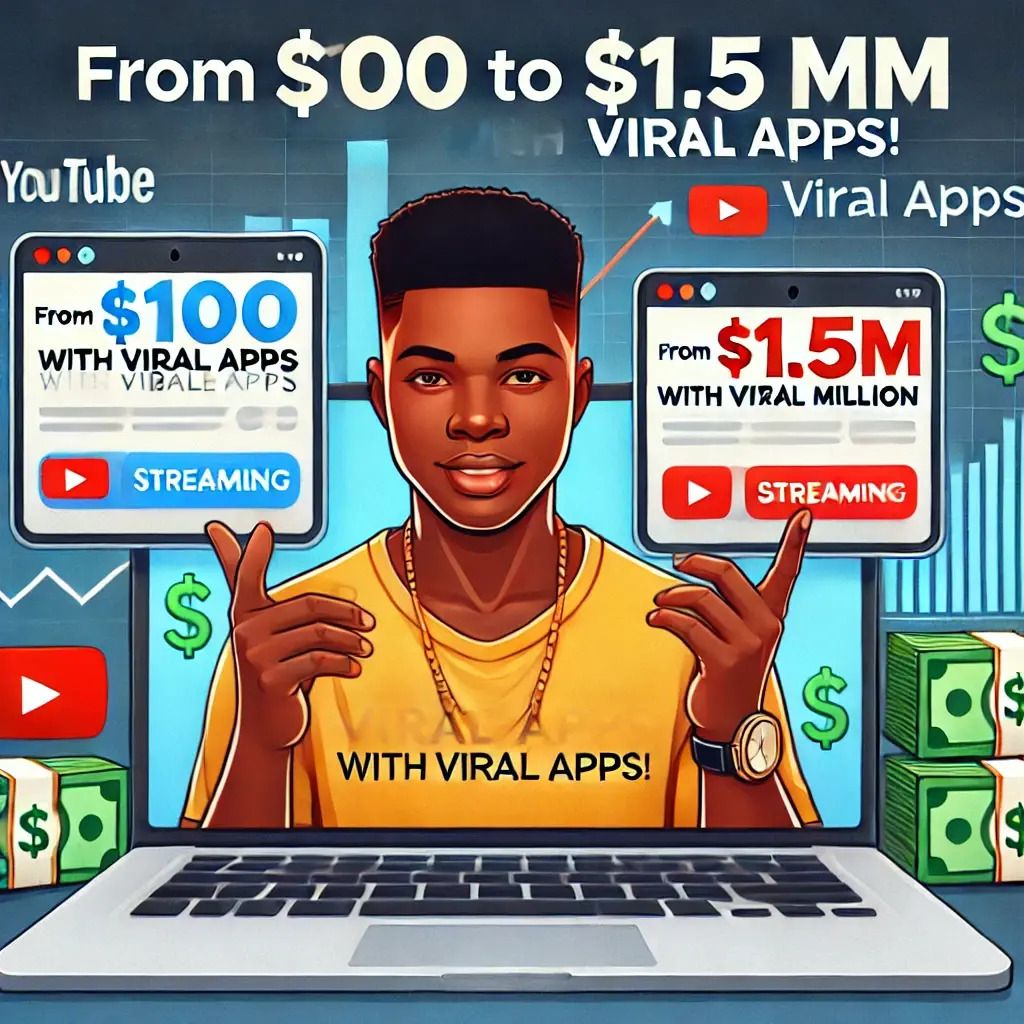
Today, we’re diving into the story of Kelechi, a 22-year-old Nigerian entrepreneur who moved to the U.S. with just $100 in his pocket — and went on to build two mobile apps generating $1.5 million in under a year.
In this story, you’ll discover:
Top Advice
The $100 Beginning
How He Built His First Million-Dollar App
The Secret Distribution Strategy You’ve Never Heard Of
The Streamer Playbook That Drove Millions of Views
His Second App: Clean Eats
The Tech Stack Behind His Success
His 2025 App-Building Playbook
Final Advice: Building Like the Exception
How a Tiny Twist Turned Into $35K/Month
Top Advice
“Distribution isn’t luck — it’s math. Don’t chase virality; engineer it through volume, testing, and iteration. The more you ship, the luckier you get.”
Managing Microsoft Copilot Adoption with Rubrik Agent Cloud
Sponsored
AI assistants like Microsoft Copilot introduce governance and recovery risks in business.
Rubrik Agent Cloud offers unified observability, governance, and rapid recovery for all AI agents.
Join our deep dive to learn how Rubrik Agent Cloud enables secure Copilot adoption via:
Monitoring: Automatic agent inventory.
Governing: Policy enforcement for high-risk actions.
Remediation: Undoing agent mistakes with minimal downtime.
Ensure cyber resilience for your AI-driven future with Rubrik.r
“I moved to the U.S. with only $100 — and a dream to build.”
That single line captures the relentless drive of Kletchi, a 22-year-old from Nigeria who arrived in America with nothing but ambition—and turned that hunger into two viral apps generating $1.5 million in just twelve months.
This isn’t just a story about coding or luck.
It’s about relentless execution, creative distribution, and the belief that even with no funding or connections, you can build something extraordinary—one idea, one app, one viral video at a time.
“I moved to the U.S. with only $100 — and a dream to build.”
That single line captures the quiet intensity of Kelechi, a 22-year-old from Nigeria who landed in America with no network, no funding, and no backup plan — just raw ambition and a laptop.
Within 12 months, he turned that $100 into two viral apps, over 700,000 downloads, and $1.5 million in revenue.
This isn’t just a story about apps or luck.
It’s about speed, focus, and execution — how one young builder used creativity, grit, and the right distribution strategy to turn code into cash.
The $100 Beginning
When Kelechi moved to the U.S., he had one goal: build something that could change his life.
His first attempt, a small social photo app called Casp, failed quickly.
It had only a few thousand users — but that failure gave him his first winning insight.
Inside Casp, one user frequently shared personal photos: cooking, studying, everyday life. Curious, Kletchi started chatting with her — and realized there were no good tools for starting real, confident conversations online.
So he built one himself.
He coded a quick AI script that generated personalized message ideas.
What began as a NestJS backend script for fun became Social Wizard, the app that would go on to make nearly a million dollars.
The Breakthrough: From Side Script to Viral App
At first, Social Wizard was just a weekend experiment. But when Kelechi shared it with a few friends, something clicked.
“It was the first time my high school friends actually cared about what I was building.”
That small validation was all he needed.
He cleaned up the interface, launched it on the App Store, and waited.
The first sale came in late January — a modest $10.
But four weeks later, he’d cracked the code of distribution.
Two weeks after that: $3,500 MRR.
One month later: $25,000 MRR.
By mid-year: $250,000 cash collected.
No ads. No investors. No growth hacks.
Just one powerful insight about how to make people stop scrolling.
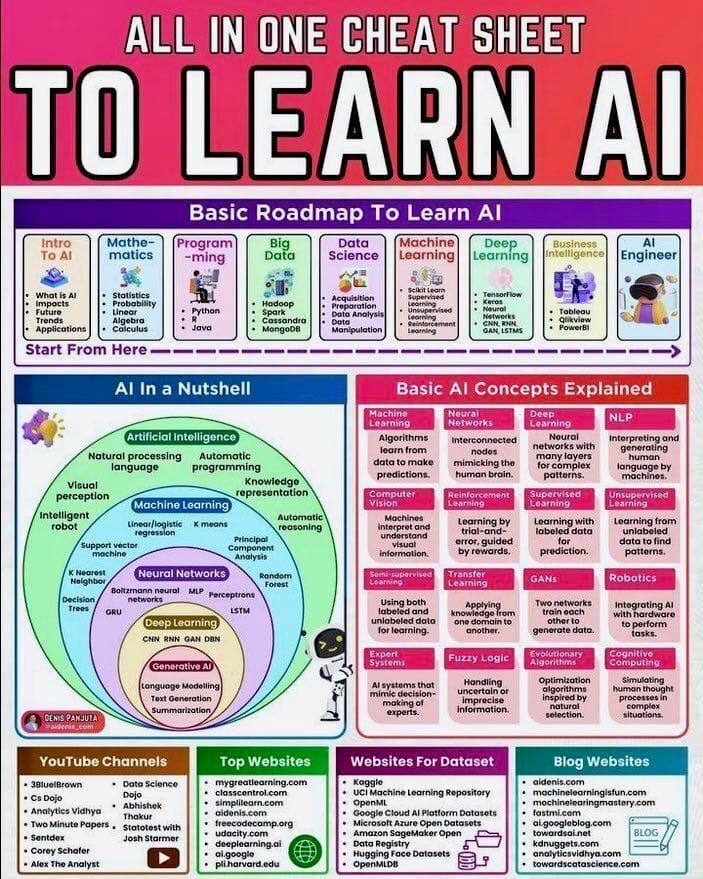
ALL IN ONE CHEAT SHEET TO LEARN AI
The Secret Distribution Strategy
Most app founders think distribution means ads, SEO, or TikTok.
Kelechi took a different approach — one built on “show, don’t tell.”
Instead of trying to sell Social Wizard, he showed it in action.
The app’s main use case was helping guys respond to Instagram stories — so he partnered with micro-streamers who made relatable, funny content in that niche.
He didn’t go after big influencers.
He targeted degenerate, under-the-radar streamers with small audiences but highly engaged followers.
One $120 video went viral with 2 million views and brought in tens of thousands of dollars in revenue.
The secret?
The creator simply used the app live on stream — no ad read, no hard sell.
“Distribution is always a show-don’t-tell game.
People don’t want to be sold — they want to see something that works.”
The Streamer Playbook
Once the viral format was proven, Kelechi scaled it relentlessly.
He repurposed the same video idea across dozens of creators and channels.
Each video showed the same moment: a streamer responding to a girl’s story using the Social Wizard app.
It was short, visual, and instantly shareable — the perfect viral loop.
“If your video doesn’t make people pause, they’ll scroll past.
Find that one moment that forces a pause — that’s your hook.”
From that single strategy, Social Wizard grew to 600,000+ downloads and $60,000/month in revenue — all without paid ads.
His Second App: Clean Eats
After automating Social Wizard’s operations, Kelechi built a second app: Clean Eats.
The concept was simple — scan a food barcode, and the app tells you how it affects your skin or weight.
While Social Wizard targeted men (ages 16–24), Clean Eats focused on women (ages 18–28).
Both apps, however, sold the same thing: confidence.
“With Social Wizard, we sold confidence in social life.
With Clean Eats, we sold confidence in health and beauty.”
Within four months, he scaled Clean Eats to $10,000/month — and later sold it to a UK-based company.
The Tech Stack Behind His Success
Despite the scale, Kelechi kept his tech stack simple and affordable.
Frontend: React Native
Backend: NestJS
Database: Firebase
Analytics: Mixpanel
Hosting: Render / Heroku
Infrastructure cost: $1,000–$2,000/month.
Profit margin: 90%+.
“Most people overbuild.
I focus on tools that get me live fast — scalable, simple, and cheap.”
His 2025 Playbook: How He’d Start Over Today
If Keelchi had to start from scratch, here’s how he’d rebuild a million-dollar app today:
Step 1 — Pick a High-Content Niche
Look for spaces where people already create a lot of videos (fitness, education, relationships).
If the niche already has content, partner with creators.
If not, make your own.
Step 2 — Focus on Volume
Most people test with five creators. Kelechi tested with a hundred.
“Distribution isn’t luck — it’s deterministic.
If you make 100 videos, one will go viral. That’s not luck. That’s math.”
Step 3 — Scale Relentlessly
Once a format works, duplicate it across accounts, creators, and variations.
Virality compounds through consistency and repetition.
Step 4 — Don’t Overthink Niches
You don’t always need creators in your exact space.
If you’re building a health app, a cooking creator might reach the same audience.
Lessons from His Journey
After building two profitable apps from scratch, Kelechi’s journey offers timeless lessons for modern creators and founders:
💡 1. Speed beats perfection.
He shipped fast, iterated faster, and learned from feedback instead of waiting for a “perfect” launch.
💡 2. Distribution > Product.
A good idea is worthless if no one sees it. Kletchi focused 80% of his time on getting attention, not just building.
💡 3. Small creators can drive big impact.
Micro-influencers with loyal communities often outperform paid ads by 10x.
💡 4. Sell emotion, not features.
Whether it’s dating or dieting, what people buy is confidence.
💡 5. Keep it lean.
Simple tech, low overhead, and tight focus let him keep 90% profit margins while scaling globally.
💡 6. Obsession is a strength, not a flaw.
“You’re not weird for skipping weekends — you’re just focused on something that matters.”
Final Takeaway: Building Like the Exception
Kelechi’s story isn’t just about apps — it’s about mindset.
He proved that in today’s world, distribution beats invention, and that even with no capital, anyone can build something real with focus and consistency.
His formula was simple:
Build fast.
Show, don’t tell.
Partner smart.
Repeat what works.
From $100 to $1.5 million in a year — this is what happens when relentless execution meets viral distribution.
“To be exceptional, you have to be the exception.”
You don’t need investors, a Silicon Valley zip code, or a computer science degree to build something that lasts. What you do need is focus, creativity, and the willingness to outwork uncertainty.
Kletchi’s story proves that even with $100, no network, and no safety net, you can create real success through speed, testing, and smart distribution. With lean tools, viral strategy, and relentless execution, he turned a simple idea into $1.5 million in app revenue—no ads, no hype, just consistency and clarity of purpose.
How a Tiny Twist Turned Into $35K/Month
We Value Your Feedback
Was this featured story helpful? Rate it, and let us know how we can improve.
How would you evaluate our today's newsletter?We read your emails, comments, and poll replies regularly. Your feedbacks help us to improve and deliver the best possible newsletter. |
Stay tuned for more stories that showcase the diverse ways people are achieving financial success. Until next time, keep exploring and keep learning.
Ignore this Texts:
🚨 Emergency Cybersecurity Disclaimer & Critical Incident Notice 🚨
This notification is being issued due to an active or recently detected cybersecurity emergency. All individuals, employees, clients, vendors, contractors, and stakeholders are hereby advised that the security, reliability, and trustworthiness of systems, communications, and data cannot be guaranteed at this time. Extreme caution must be exercised.
1. Systems Integrity Severely Compromised
Core infrastructure, applications, and digital assets may be actively compromised.
Unauthorized access, manipulation, deletion, or theft of data may already be in progress.
Standard protections (including firewalls, antivirus, encryption, and monitoring) may no longer be effective or trustworthy.
Malicious actors could be intercepting or tampering with communications in real time.
2. Elevated Risk of Personal & Corporate Harm
Confidential, proprietary, financial, and personal data may already be exposed on external systems, including black markets, dark web forums, or hostile networks.
Identity theft, fraud, unauthorized financial transactions, reputational damage, and business disruption are highly probable consequences.
All users are advised to immediately change passwords, enable multi-factor authentication, and assume that previous login credentials have been compromised.
3. Unstable Operational Environment
Business continuity is not assured. Services, platforms, and applications may fail, be inaccessible, or operate unpredictably.
Emails, messages, and digital documents may be forged, intercepted, or maliciously altered. Do not trust digital communications at face value until further notice.
Remote access, VPNs, and cloud services should be considered at elevated risk of compromise.
4. No Assumption of Safety or Privacy
Users should not assume any interaction with systems, servers, devices, or networks is safe.
Even seemingly normal operations may be infected with malware, ransomware, spyware, or backdoors.
Sensitive information (including personal identifiers, financial records, intellectual property, and health data) should not be transmitted until systems are verified as secure.
5. Potential Widespread Impact
This incident may not be isolated — there exists the possibility of cascading compromise across connected organizations, supply chains, and third-party vendors.
Anyone interacting with this environment should presume hostile infiltration is ongoing.
Secondary systems, backup servers, and cloud integrations may already be impacted.
6. Liability & Responsibility Disclaimer
The organization and its affiliates cannot be held liable for damages, losses, disruptions, or breaches resulting from this cyber incident.
Any reliance on current digital resources, communications, or infrastructure is done entirely at the user’s own risk.
Damages may include, but are not limited to:
Identity theft
Data corruption or destruction
Financial fraud or theft
Intellectual property theft
Business downtime
Permanent data loss
7. Mandatory Reporting & Cooperation
All users are obligated to immediately report any suspicious activities, including strange logins, unusual file changes, phishing attempts, or system malfunctions.
Failure to report promptly may worsen the scope and impact of the incident.
8. Ongoing Emergency Investigation
A full-scale cybersecurity investigation is in progress.
Situational updates, mandatory actions, and containment instructions will be released as new intelligence becomes available.
Until further clearance is given, assume that every digital endpoint is hostile and compromised.
⚠️ FINAL WARNING ⚠️
This is not a routine notice. This is a critical cybersecurity emergency. Treat all systems and communications as unsafe until explicitly confirmed secure by authorized cybersecurity personnel. Immediate vigilance, cooperation, and protective measures are essential to limiting damage.